.jpg-20260521061738.jpg?tr=w-1600,h-900,q-80,fo-auto,f-webp)
AQUA, in partnership with The Asian Parents, is organizing an educational program titled “AQUA Goes to Hospital: Langkah Sehat Keluarga Adem” running from April through December 2026. This initiative collaborates with a number of major hospitals in Jakarta and its surrounding areas, including RS Mitra Keluarga Bintaro.
Centering around the theme “Small Steps, Big Impact: Tips on Choosing the Best Hydration for the Family,” the program was successfully launched at RS Mitra Keluarga Bintaro recently. The event featured educational sessions led by experts who shared insights on how to choose safe, high-quality drinking water.
The activity was also packed with interactive educational workshops and direct discussions with mothers, who play a key role in making health-related decisions for their families.
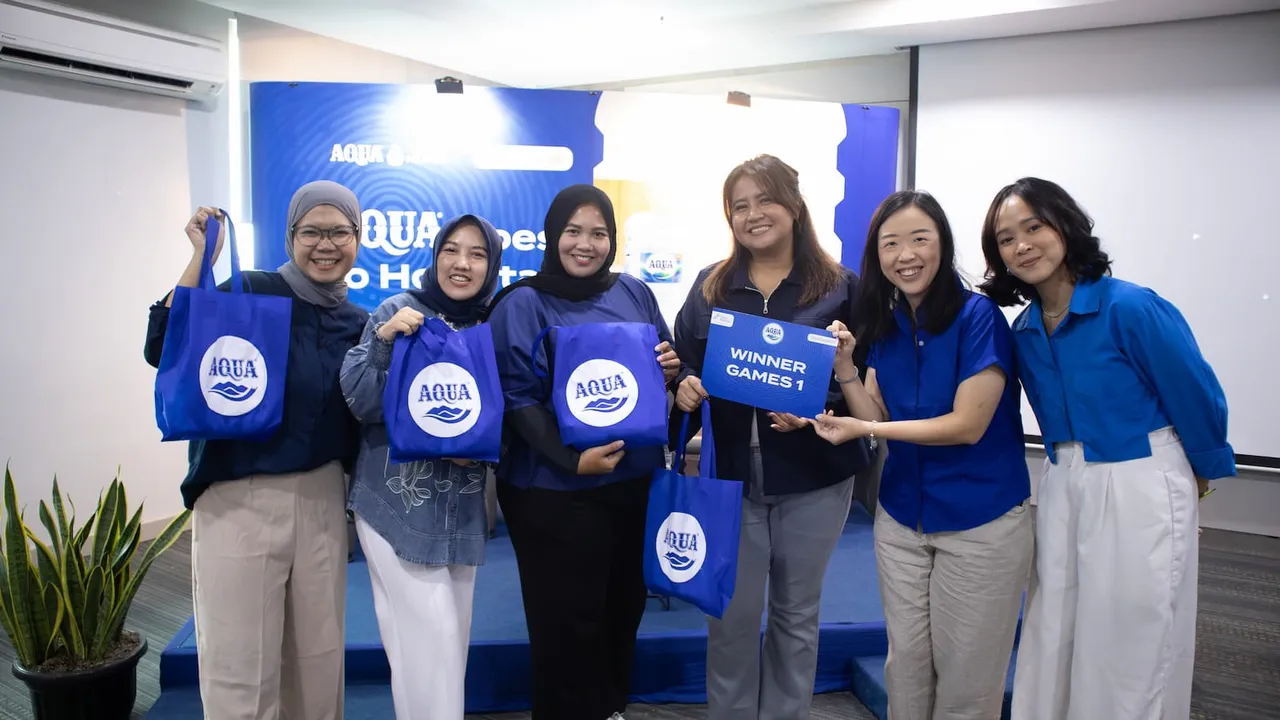
Fella Falencia, Marketing Manager at AQUA, stated that this program series was born from a shared commitment by AQUA, The Asian Parents, and RS Mitra Keluarga Bintaro to help mothers make the best choices for their families. This includes selecting high-quality drinking water to meet the hydration needs of all family members, especially children.
“Not only at home, but our collaboration with major hospitals in Jakarta and its surrounding areas, with RS Mitra Keluarga Bintaro as a prime example, is also expected to maximize family health protection through high-quality hydration,” said Fella.
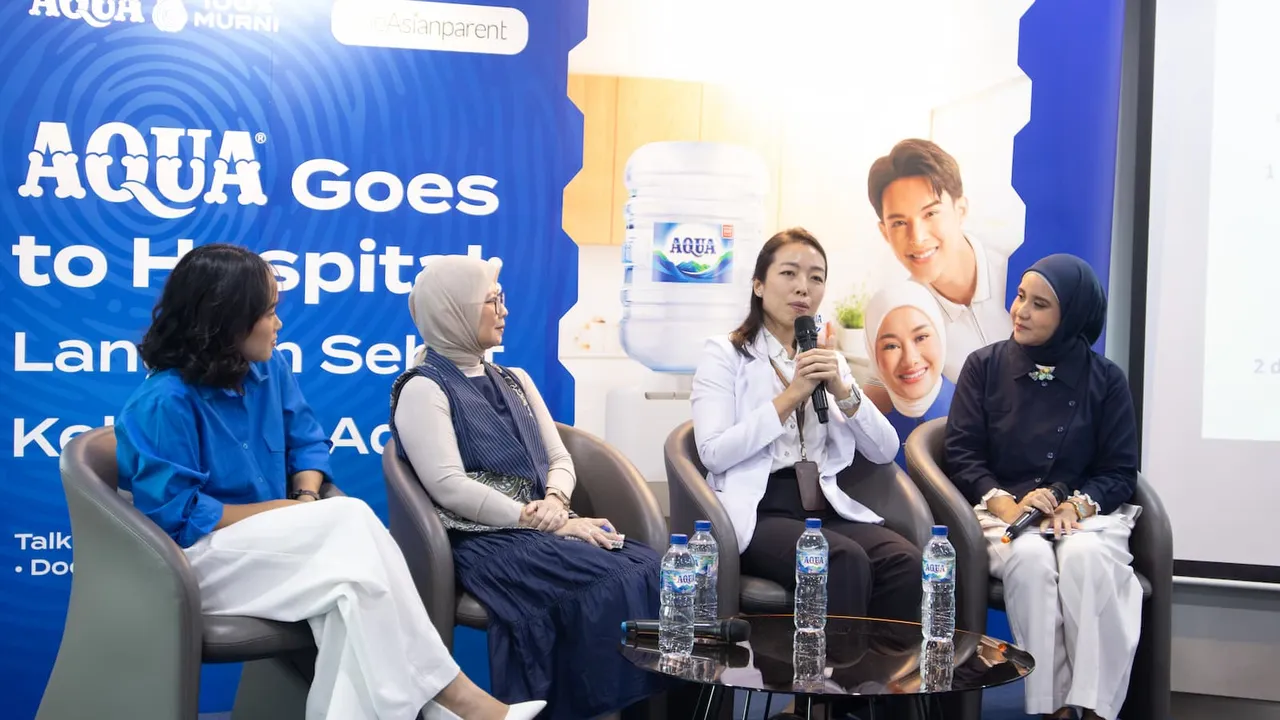
dr. Adelina Haryono, Sp.GK, AIFO-K, a Clinical Nutrition Specialist at RS Mitra Keluarga Bintaro, pointed out that many people still do not fully realize the importance of sufficient daily water intake.
“Many feel they have already drunk enough water, when in fact, a large portion of the population still suffers from a lack of fluids. It is noted that about 1 in 5 children and adolescents, as well as 1 in 4 adults, still do not consume enough water. Yet, our bodies are made up of approximately 50–60% water, which plays a vital role in nearly all bodily functions, from cell formation to maintaining fluid balance. Fluid requirements vary, but generally, children need about 1.2–1.5 liters per day, while adults require around 1.8–2 liters per day. Most importantly, do not wait until you feel thirsty to drink,” dr. Adelina emphasized.

dr. Tria Rosemiarti, Dipl in Nutrition, MKK, from Nutrition Design & Hydration Science Research and Innovation at AQUA, revealed that drinking water safety remains a major challenge.
“Many water sources are still at risk of contamination. Data from the Household Drinking Water Quality Study (SKAMRT) shows that 7 out of 10 households in Indonesia still consume water contaminated with E. coli, and only a small fraction have access to safe drinking water. Boiling water can kill most bacteria, but it does not remove heavy metals or other chemical compounds that might be present in the water, especially if the quality of the water source itself is unmaintained.”
dr. Tria also expressed her concern about the potential risks that consuming water from uncertified and poorly maintained sources may pose to early childhood growth and development.
”The latest publication released in an international journal reveals that children who are routinely exposed to unsafe drinking water containing microbiological contamination, specifically Escherichia coli bacteria, face a stunting risk up to 4.14 times higher [6]. These findings incorporate data from several regions in Indonesia, including a comprehensive study across 13 provinces and a field study in Deli Serdang, North Sumatra. This condition can potentially trigger nutrient malabsorption and disrupt growth and development, which ultimately affects a child's height, memory retention, language skills, and academic performance when they reach school age,” she explained.
Almiranti Fira, a Wise AQUA Mother, asserted that a mother’s role is vital in shaping a family's hydration habits, noting, “At home, a mother acts like the ‘minister of health’ for her family. Simple choices like drinking water can have a significant impact because children will naturally follow their parents' daily habits.”
Fira also shared a few simple tips to help family members, particularly children, develop the habit of drinking plain water without feeling forced. She believes that good habits are built through setting a good example and consistency.
“Start with small adjustments: ensure water is easily accessible, establish routine drinking times, and most importantly, parents must lead by example. Good habits are built, not forced. Therefore, choosing water that has guaranteed quality is the simplest step to safeguard family health every single day,” Fira remarked.
In closing, Fella Falencia hopes that AQUA’s collaborations with experts and communities can continue to foster healthy habits among Indonesian families.
“Choosing safe and high-quality drinking water is not just for today; it is a long-term health investment for every single family member. Through this program, AQUA reinforces its commitment to continuously educating the Indonesian public on the importance of healthy hydration, while presenting premium mineral water products not only at home but also across healthcare facilities and hospitals. By teaming up with professionals and communities, AQUA hopes to drive simple daily changes that yield a massive impact on the health of Indonesian families,” she concluded.

