
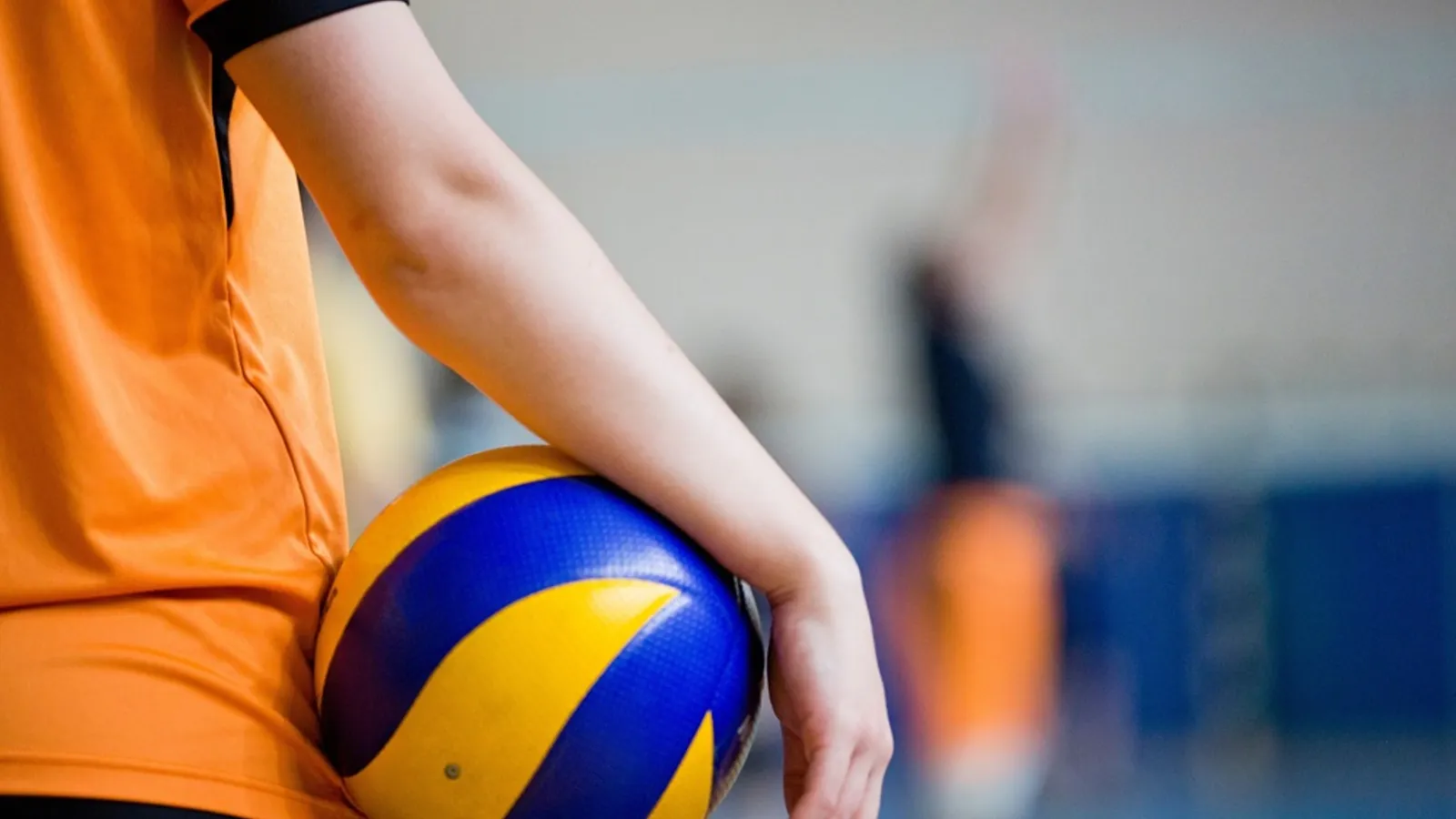
Volleyball is one of the most popular team sports. To enjoy the game safely and reduce the risk of injury, it's important to understand the basic rules and learn the proper techniques for playing volleyball.
This article will discuss the basic volleyball techniques for beginners, the official rules of the game, and practical tips to help prevent your hand pain while playing volleyball. Let's dive in!
History of Volleyball
Volleyball was first invented in 1895 by William G. Morgan. At the time, he created the game as a less physically demanding indoor alternative to basketball and originally named it "Mintonette."
However, in 1896, the name "Mintonette" was changed to "volleyball." The new name was introduced during the sport's first public demonstration at the Young Men's Christian Association Training School, where the game was officially presented.
Today, the international governing body for volleyball is the Fédération Internationale de Volleyball (FIVB), while the sport is governed in Indonesia by the Persatuan Bola Voli Seluruh Indonesia (PBVSI).
How to Play Volleyball
In general, volleyball is played by hitting the ball using various techniques to send it over the net and into the opposing team's court.
To learn how to play volleyball properly, you'll need to understand the equipment used, the official rules, and the basic techniques of the game. To help you get started, here's everything you need to know about volleyball:
Volleyball Player Positions
Each volleyball team consists of six players, with every player taking on a specific role. Here are the key player positions in volleyball and their responsibilities:
- Server: Starts the rally by serving the ball. If the serve is unsuccessful, the opposing team is awarded a point.
- Setter: Organizes the team's offense by setting the ball for the spiker or outside hitter to attack.
- Spiker/Attacker: Receives the set from the setter and attacks by spiking the ball powerfully into the opposing team's court.
- Blocker: Defends against the opposing team's attacks by blocking spikes at the net.
- Libero/Defensive Specialist: Receives serves and defends against the opponent's attacks. The libero is not allowed to attack the ball above the height of the net or set the ball from in front of the attack line for an attacking hit.
- Utility Player: A versatile player who can perform multiple roles and fill in at different positions on the team.
Volleyball Rules
Learning how to play volleyball as a beginner is easier than you might think, as long as you understand the basic rules of the game. Here are some of the key volleyball rules you should know:
- Played between two teams.
- A team typically consists of six players, although a minimum of four players is required to play.
- Each player must remain on their side of the court and is not allowed to enter the opposing team's court.
- The libero is not allowed to serve, rotate into the front row, or make an overhead set from in front of the attack line that results in a teammate's attack.
- The libero wears a different-colored jersey from the rest of the team.
- Player substitutions are allowed during the match.
- The team that wins the coin toss serves first.
- The serve must be taken from behind the end line, and the ball must travel over the net into the opponent's court.
- A team wins a set by scoring 25 points first.
- The ball is considered out if it lands outside the court boundary lines. If it lands on the boundary line, it is considered in.
- Players are not allowed to catch or throw the ball.
- A match is typically played as a best-of-three-set match. A team that wins the first two sets wins the match. If each team wins one of the first two sets, the match proceeds to a deciding third set.
- If the score reaches 24–24 (deuce), play continues until one team gains a two-point lead to win the set.
Essential Volleyball Equipment
Besides understanding the basic rules, it's also important to familiarize yourself with the essential equipment needed to play volleyball. Here's what you'll need:
1. Volleyball
According to the Fédération Internationale de Volleyball (FIVB), volleyballs are typically made from rubber and leather. Today, however, most volleyballs are made primarily of synthetic leather, as it offers better control and handling during play.
The Fédération Internationale de Volleyball (FIVB) sets the following standards for a regulation volleyball:
- Perfectly spherical in shape.
- Measures 18–20 cm in diameter.
- Has an internal air pressure of 4.26–4.61 psi.
- Weighs 260–280 grams when fully inflated.
2. Volleyball Net
As the divider between the two sides of the court, the net is an essential piece of volleyball equipment. According to the Fédération Internationale de Volleyball (FIVB), a regulation volleyball net must meet the following specifications:
- Net height: 2.24 m for women's volleyball.
- Net height: 2.43 m for men's volleyball.
- Net width: 1 m.
- Net length: 9 m.
- Distance from the net posts to the sideline: 0.5–1 m.
- Net mesh size: 10 cm × 10 cm (square mesh).
- Antenna height: Extends 80 cm above the top of the net.
- Width of the side bands: 5 cm.
3. Volleyball Court
The standard dimensions of a volleyball court are as follows:
- Court length: 18 m.
- Court width: 9 m.
- Boundary line width: 5 cm.
- Service zone: 3 m behind the end line.
- Attack line: 3 m from the center line on each side of the court.
Basic Volleyball Techniques
Volleyball is one of the most popular sports in Indonesia. If you're interested in playing this exciting team sport, it's important to master the basic volleyball techniques. Here's an overview of the essential skills you need to know:
1. Serve
The first basic volleyball technique is the serve, which marks the start of a rally. There are several types of serves in volleyball, including the float serve, topspin serve, and jump serve.
However, beginners usually only need to learn two basic serving techniques: the overhand serve and the underhand serve. For an overhand serve, the ball is typically tossed about 1 meter into the air before being struck. For an underhand serve, the toss is much lower at around 50 cm.
2. Passing
Passing is a fundamental technique used to receive and direct the ball to a teammate, often to set up an attack. There are two basic types of passing in volleyball: the overhead pass and the forearm pass. Here's a closer look at each technique:
- Forearm Pass: Hold your hands together to create a stable platform, allowing you to receive and control the ball more effectively.
- Overhead Pass: Use the fingers of both hands to direct the ball upward. This technique is commonly used to receive high balls from the opposing team or to set up an attack.
3. Smash Spike
The next technique is the spike, an offensive move used to score points by attacking the opposing team. A well-executed spike is often difficult to defend because of its speed and steep downward trajectory into the opponent's court.
4. Block
Blocking is a fundamental defensive technique in volleyball used to stop the opposing team's attacks, especially spikes. To execute a block, a blocker jumps at the net and uses both hands to prevent the ball from crossing into their side of the court.
Blocking must be performed carefully, as touching the net or reaching over it illegally is considered a fault that awards a point to the opposing team.
Tips to Prevent Hand Pain When Playing Volleyball
When playing volleyball, your hands are constantly in action; whether you're serving, passing, spiking, or blocking. With so much repetitive contact and movement, it's not uncommon to experience hand pain or soreness after playing.
Using the wrong technique when hitting or receiving the ball can even lead to injuries to the hands, wrists, or fingers. So, how can you play volleyball without hurting your hands? Here are some tips to help you stay comfortable and reduce your risk of injury.
First, make sure you use the proper technique. For example, when performing a forearm pass, make contact with the inside of your forearms rather than using your hands or fingers directly.
When performing a spike, keep your palm open and your fingers spread apart. Also, aim to contact the upper part of the ball to create a steeper downward trajectory, making your spike more effective.
Second, make sure to warm up your shoulders, arms, and wrists thoroughly before playing. A proper warm-up helps reduce muscle tension and prepares your body for the demands of the game.
Lastly, if you have a history of hand or wrist injuries, consider wearing supportive gear, such as an elastic bandage or finger support, to help reduce discomfort while playing volleyball.
That is our guide to playing volleyball, covering everything from the basic techniques and rules to practical tips for preventing hand pain. By understanding the fundamentals of the game and applying the proper techniques, you'll be better prepared to contribute to your team's performance and help secure a win.
To help maintain your stamina and stay hydrated while playing volleyball, be sure to keep a bottle of AQUA 600 ml within reach. Its convenient, portable size makes it easy to stay hydrated during volleyball matches, training sessions, or other high-intensity workouts.
Not all drinking water is the same as AQUA. AQUA is sourced from carefully selected mountains, with protected springs that go through 9 selection criteria, 5 stages of quality control, and at least 1 year of research covering more than 600 parameters.
In addition, AQUA is halal certified and meets both BPOM and SNI standards. This means you can trust its quality and cleanliness without hesitation.
So remember to choose #AQUADULU to meet your hydration needs before, during, and after playing volleyball, because AQUA is 100% pure, 100% Indonesian, and 100% halal!
