
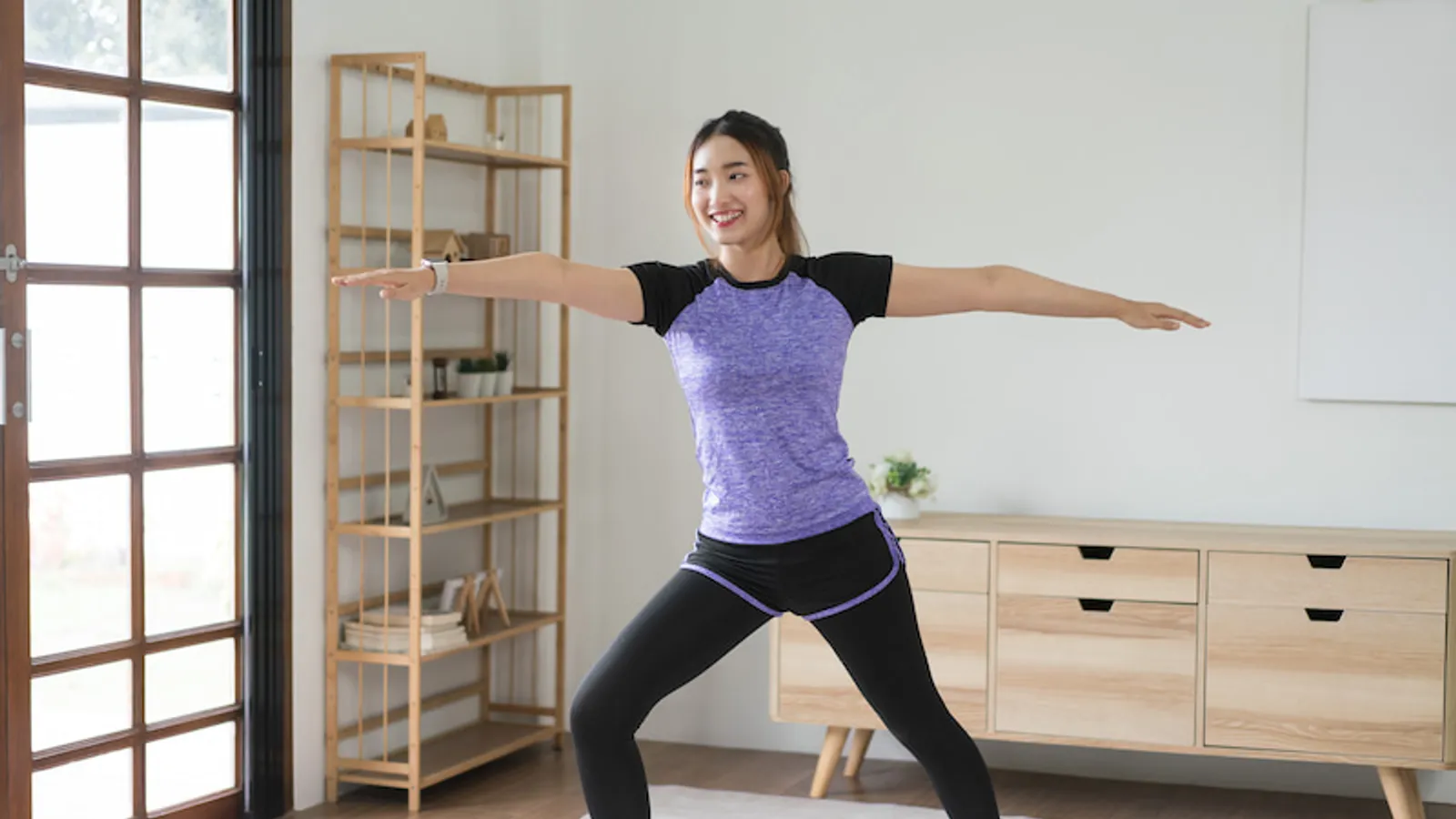
Rhythmic gymnastics offers many health benefits, ranging from improving body flexibility to helping maintain mental well-being. In fact, rhythmic gymnastics combines physical movements with musical rhythms, keeping the body active while also promoting relaxation.
Want to learn more about rhythmic gymnastics and its benefits? Read this article to the end for more information.
What Is Rhythmic Gymnastics?
Rhythmic gymnastics is a physical activity performed to the rhythm of music. The movements in this exercise usually combine elements of sport and art, such as dance and ballet, making them appear more graceful and expressive.
Unlike artistic gymnastics, rhythmic gymnastics is a separate sport discipline. It can be performed individually or in groups, with or without equipment.
Currently, rhythmic gymnastics is not only known as a competitive sport but is also increasingly being adapted into fitness classes, such as dance workouts. This has made rhythmic gymnastics an increasingly popular exercise option.
Benefits of Rhythmic Gymnastics for Health
Rhythmic gymnastics offers a variety of health benefits, ranging from increasing muscle strength to helping maintain mental well-being. Here are the details:
- Improves muscle strength: The movements in rhythmic gymnastics engage many parts of the body, such as the arms, abdomen, and legs. This helps strengthen muscles and improve overall physical endurance.
- Increases body flexibility: Stretching movements in rhythmic gymnastics help maintain muscle and joint flexibility, making the body more supple.
- Improves balance and coordination: Performing movements that follow musical rhythms can help improve body balance and coordination during activities.
- Helps maintain mental health: Rhythmic gymnastics accompanied by music can help relieve stress and improve mood. This activity also provides a relaxing effect on the body.
- Trains concentration: Following movements in sync with music can help improve focus and concentration.
- Supports cognitive function: Rhythmic gymnastics can help improve blood flow to the brain, potentially supporting memory and learning abilities.
Read also: 9 Types of Exercises to Improve Your Fitness and Health
Basic Movement of Rhythmic Gymnastics
To perform rhythmic gymnastics well, there are several basic movements that need to be learned first. These movements serve as the foundation before trying more complex routines.
1. Footwork (Step)
The footwork movement is used to follow the beat of the music, such as stepping to the side, forward, or backward.
This movement is a basic element in rhythmic gymnastics because it helps maintain tempo and rhythm. Mastering footwork makes it easier to follow other movement sequences.
2. Arm Swing
Arm movements are performed in harmony with footwork to create balanced and graceful motion.
Arm swings also help emphasize expression in each movement. In addition, coordination between the arms and legs can make the movements look more harmonious.
3. Pivot (Turn)
Turns help train balance and body coordination. This movement is usually performed by standing on one foot while rotating the body. When done properly, turns can make movements look more graceful and dynamic.
4. Jump
Light jumps are used to add variation and dynamism to the routine. In addition, jumps help train leg muscle strength and body agility. This movement is usually combined with arm swings to maintain balance and visual harmony.
5. Flexibility Movements
These movements involve stretching and bending the body to create more fluid and expressive motion. Flexibility is very important for ensuring smooth, fluid movements rather than stiff ones.
With regular practice, the body will become more flexible and able to follow various movement variations.
Types of Rhythmic Gymnastics
Rhythmic gymnastics is also known for using various apparatus that make the movements more attractive. Here are some of the apparatuses used in rhythmic gymnastics:
1. Ribbon
The ribbon is used to create movement patterns such as waves, spirals, and figure-eights that look beautiful.
2. Ball
The ball is used in movements such as throwing, catching, and rolling. This apparatus requires good coordination.
3. Rope
The rope is used for jumping and swinging movements. Although it is not always included in the latest Olympic events, the rope is still considered a basic apparatus in rhythmic gymnastics.
4. Clubs
Clubs are used in pairs and are manipulated by rotating, throwing, and catching them again.
5. Hoop
The hoop can be rotated around the body, thrown, or rolled to create dynamic movements. It is usually made of wood or plastic (polyethylene/PVC).
Tips on How to Start a Rhythmic Gymnastics
For those of you who are interested in trying rhythmic gymnastics, here are several tips to help you practice more comfortably and safely:
1. Learn Basic Skills
To start rhythmic gymnastics, you need to understand several basic skills, such as posture, balance, flexibility, and coordination. Make sure your body stays upright, your shoulders relaxed, and your feet aligned so that your movements look more stable and neat.
In addition, you can also begin learning basic apparatus techniques, such as throwing, catching, or swinging.
2. Use Appropriate Equipment
Rhythmic gymnastics often uses equipment such as ribbons, balls, ropes, clubs, or hoops. For beginners, choose lightweight and easy-to-control equipment so it is more comfortable to use.
Using suitable equipment can help you better understand basic techniques while also reducing the risk of performing movements incorrectly.
3. Use Music with a Moderate Tempo
Choose music that is easy to follow so you can match your movements to the rhythm. Music with a moderate tempo helps you understand movement patterns without rushing.
Once you are used to it, you can try music with a faster tempo to improve your skills.
4. Do Warm-Up and Cool-Down
Warming up helps prevent injuries, while cooling down helps the body relax after exercise. Warm-ups can include light stretching to improve flexibility and prepare the muscles.
Meanwhile, cooling down helps reduce muscle tension after performing movements.
5. Practice Regularly
Regular practice can help improve flexibility, balance, and body coordination. Consistency also helps the body become more accustomed to various movements. With consistent training, your rhythmic gymnastics skills will gradually improve.
That is an overview of rhythmic gymnastics, covering its definition, benefits, and tips for getting started. By combining movement with musical rhythm, rhythmic gymnastics can be an exercise option that is not only beneficial for your health but also enjoyable to practice.
To maximize its benefits, make sure to maintain proper hydration during exercise. Physical activity causes the body to lose fluids through sweat, so it is important to replenish them by drinking enough water.
To help maintain hydration, you can make it a habit to drink quality bottled water, such as AQUA 600 ml, before, during, and after exercise. This helps keep your body refreshed and ready to perform rhythmic gymnastics at its best.
Why choose AQUA DULU? Because not all water is AQUA, which comes from carefully selected mountains, with its water sources protected through nine selection criteria, five processing stages, and at least one year of research involving more than 600 parameters.
So, don’t forget to choose #AQUADULU to help keep your body properly hydrated and support your exercise performance. AQUA offers a naturally refreshing taste and can be enjoyed even without refrigeration, making it a suitable companion throughout the day.
AQUA also offers the AQUA 100% Untung promotion, which is easy to join. Simply find the unique code under the cap of an AQUA water gallon bottle, collect points, and redeem them for available rewards. AQUA is 100% Pure, 100% Indonesian, and 100% Halal.
