
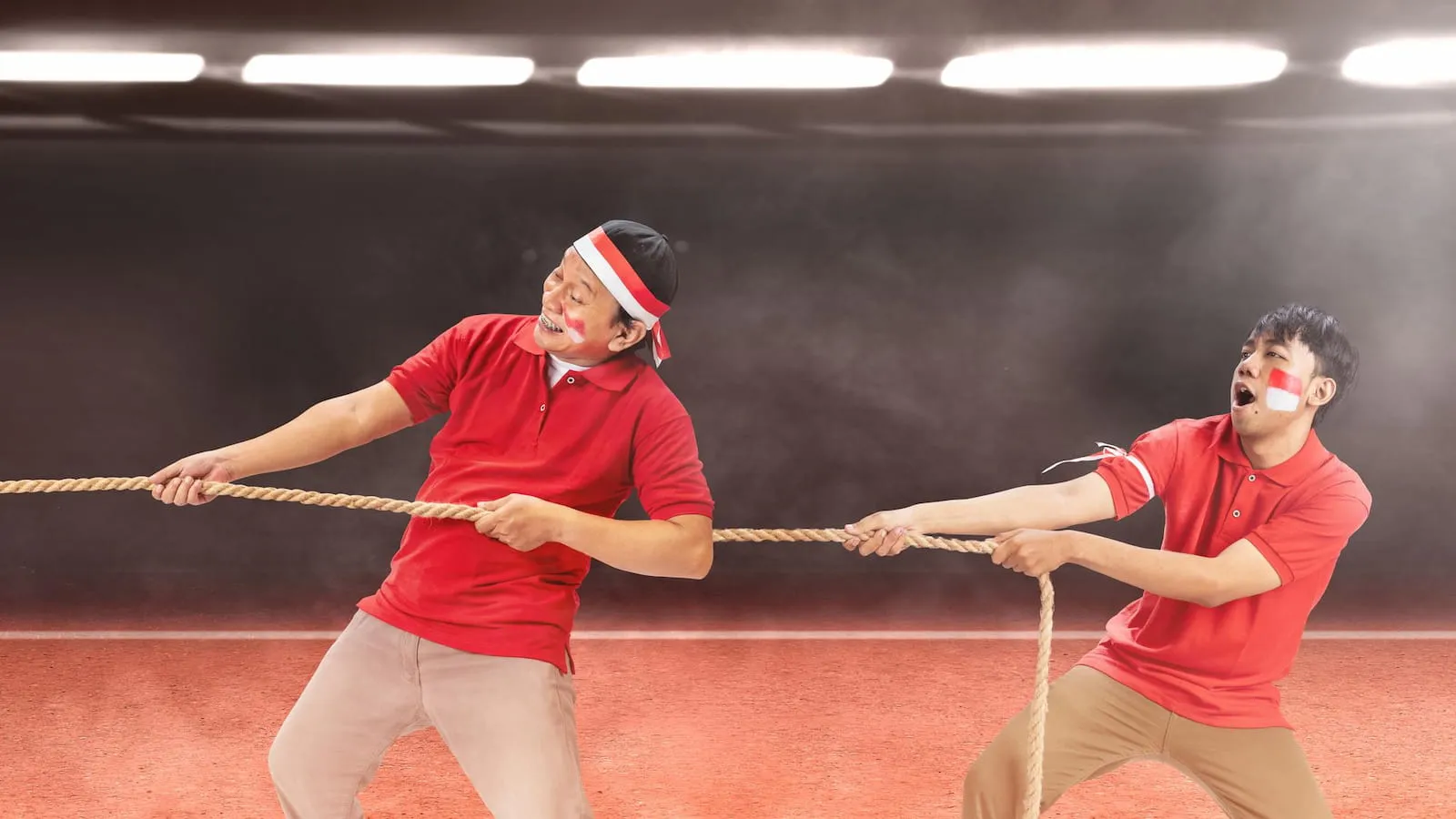
Traditional games have always been an inseparable part of Indonesia’s Independence Day celebrations.
In addition to bringing excitement, various competitions inspired by traditional games also serve as a moment to strengthen togetherness, foster teamwork, and create memories with family and neighbors.
In line with the spirit of Kaum Adem Indonesia, the excitement of August 17 will feel even more meaningful when celebrated with sportsmanship, mutual support, and a calm attitude in every competition.
Curious about which traditional games are suitable for August 17 competitions? Check out the list in this article.
List of Traditional Games for August 17 Competitions Inspired by Kaum Adem Indonesia
Celebrating August 17 with various traditional games is not merely about who wins or loses. More than that, each competition is an opportunity to strengthen togetherness and build the spirit of mutual cooperation.
The spirit of Kaum Adem Indonesia is embodied through various fun and sportsmanlike games where participants support one another while keeping their bodies refreshed and hydrated throughout the activities. Here are some games you can try:
1. Panjat Pinang
Panjat pinang is a traditional game that has always been an icon of Independence Day celebrations and is a must-have every year. The game requires participants to work together to climb a greased areca palm trunk to reach the prizes at the top.
The pole being climbed is around 8–10 meters high, requiring strategy, teamwork, and a never-give-up spirit. The prizes also vary, ranging from household appliances to bicycles and electronic devices.
2. Sack Race
The sack race is a simple competition that always brings laughter. To play, participants step into a sack up to their waists and then hop toward the finish line.
Although it looks easy, maintaining balance while hopping presents its own challenge. The sack race is not only suitable for children but is also fun for adults to play.
3. Long Wooden Clogs
The long wooden clog race tests teamwork. It is played by three or more people using long wooden clogs, and participants must step in unison to reach the finish line first.
Teamwork is the key to winning the long wooden clog race. This game is effective for practicing communication and cooperation.
4. Tug of War
Something feels missing if tug of war is not part of the August 17 celebrations. It is played by two teams pulling against each other until one team manages to pull the other team across the marked line.
In addition to requiring strength, tug of war also relies on strategy and coordination so that all team members can move in unison.
5. Egrang
Egrang is played individually using bamboo or wooden stilts with footrests. Participants must maintain their balance while walking toward the finish line.
In various regions of Indonesia, this game has different names, but it remains one of the interesting cultural heritages worth preserving.
6. Cracker-Eating Contest
The cracker-eating contest is a favorite during August 17 celebrations because the rules are simple. Crackers only need to be hung from a string at the participants’ head height, and then participants must finish them without using their hands.
Eating the crackers becomes even more difficult when they start swinging. Therefore, participants need to be patient and focused when trying to bite them.
7. Marble-and-Spoon Race
In the marble-and-spoon race, participants hold a spoon in their mouths with a marble on it and then walk toward the finish line without dropping the marble. Although it may look easy, balance and composure are essential to completing the competition successfully.
8. Gobak Sodor
Gobak sodor is played in groups. One team is tasked with guarding the lines, while the other team attempts to pass through each square without touching an opponent.
The game of gobak sodor trains agility, strategy, and teamwork, making it just as exciting to play today.
9. Coin-Biting in Flour
This competition requires participants to find coins hidden in flour using only their mouths. Faces covered in flour often become entertainment in themselves for spectators and create a laughter-filled atmosphere.
10. Pillow Fight
The pillow fight is played on a bamboo pole placed across a pool. Two participants hit each other with pillows while maintaining their balance.
The winner of the pillow fight is the one who manages to knock their opponent into the water first, although sometimes both participants end up falling into the water together.
Tips to Keep August 17 Games Calm and Fun
To ensure that all traditional games run smoothly, make sure every participant can play safely, comfortably, and while maintaining the spirit of togetherness.
That way, the atmosphere of the competitions will feel more enjoyable while also reflecting the spirit of Kaum Adem Indonesia. Here are several tips you can follow:
1. Choose Games According to the Participants’ Ages
The first step to keeping August 17 games fun is to make sure the types of games are suited to the participants’ ages and abilities.
Children can take part in simple competitions, such as the cracker-eating contest or sack race, while adults can try tug of war or panjat pinang. Choosing the right games allows everyone to participate according to their capabilities.
2. Prioritize Sportsmanship and Togetherness
In competitions, of course, there will be winners and losers. This also applies to August 17 celebration competitions. Nevertheless, the most important thing is to enjoy the moment with family, friends, or neighbors by respecting and encouraging one another.
This is the value upheld by Kaum Adem Indonesia: staying calm, optimistic, and not easily provoked by emotions when facing competition.
Read also: 10 Types of Large Ball Sports You Should Know
3. Make Sure the Competition Area Is Safe and Comfortable
When choosing a location for the competitions, make sure to use an area that is spacious enough, not slippery, and free from dangerous objects to minimize the risk of injury.
If possible, provide a shaded area so that participants and spectators can remain comfortable while taking part in the series of activities.
4. Keep Your Body Hydrated
Most traditional games are played outdoors in fairly hot weather. Moreover, Indonesia is entering the dry season during the August 17 celebrations.
Hence, do not forget to take a short break and meet your body’s fluid needs by drinking bottled AQUA. With AQUA Sejuk Alami, all participants can stay refreshed and comfortable while enjoying every competition.
Those are various traditional games that can liven up the 81st Anniversary of the Republic of Indonesia. Whatever type of competition it is, the spirit of independence will feel more meaningful when celebrated with togetherness, sportsmanship, and mutual respect.
These qualities can be seen in the spirit of Kaum Adem Indonesia: staying calm, warm, optimistic, connected with one another, and not forgetting to maintain proper hydration amid various activities.
While actively participating in August competitions, make sure to complete every moment with AQUA Adem, because Hanya AQUA, Yang Dingin Alaminya, Ademin Indonesia.
AQUA mineral water comes from protected mountain sources with naturally occurring minerals that are preserved without the addition of any substances. In fact, many people find AQUA refreshing even without being chilled, making it comfortable to drink while engaging in outdoor activities.
To ensure your drinking water needs are always met during the competitions, prepare AQUA 330 ml in easily accessible areas so participants can drink AQUA while taking a break or moving between different competition locations.
With your body staying hydrated and your spirit remaining calm, Independence Day celebrations become even more exciting and memorable with AQUA.
Read also: 9 Official Basketball Rules Every Player Should Know
