
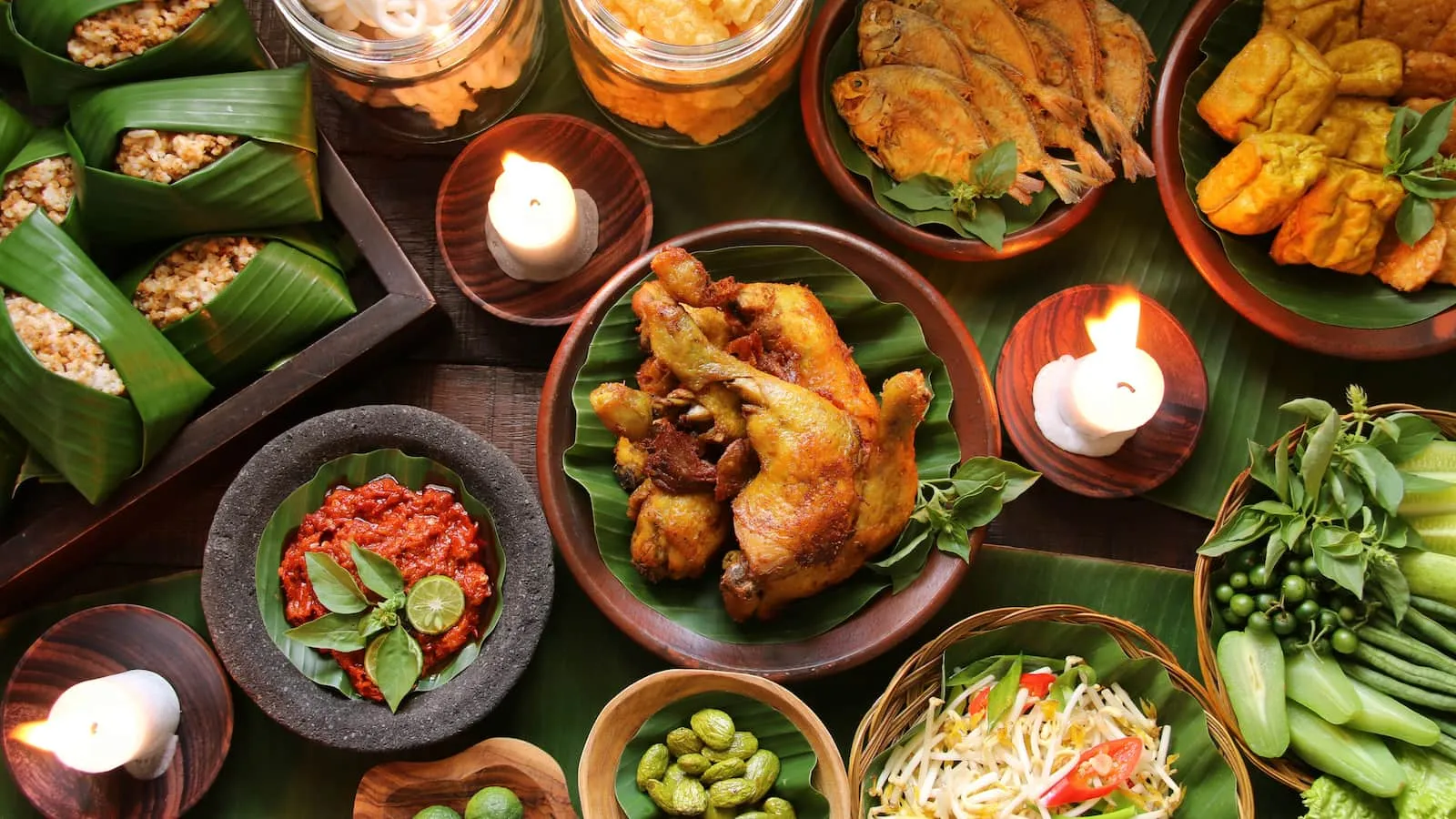
West Java is renowned for its diverse Sundanese cuisine, which is rich in flavor and a favorite among many.
Savoring signature dishes from its various regions offers a wonderful way to celebrate solidarity, share stories, and appreciate Indonesia’s cultural richness in a relaxing atmosphere.
As Independence Day approaches, this support aligns with the Kaum Adem Indonesia, embracing every moment with positivity and warmth.
So, which must-try specialties are perfect to take home as West Javanese souvenirs? Check out the full list below!
List of West Java Food Specialties
Besides being a favorite holiday destination, West Java also attracts visitors with its unique culinary flavors. From spicy, savory seblak to sweet surabi, here are some West Javanese culinary delights not to miss.
1. Karedok
Karedok is a typical Sundanese food made from various raw vegetables, such as cucumber, bean sprouts, cauliflower, long beans, basil leaves, and eggplant.
The combination of vegetables creates a fresh taste and a crunchy texture, and it's popular among healthy-food lovers.
2. Surabi
If you want to enjoy traditional snacks, West Javanese surabi is worth a try. Made from rice flour and baked in a clay oven, it has a savory, sticky taste, especially when served with brown sugar sauce.
At several surabi stalls, you can find variants ranging from coconut sugar, eggs, chicken, and corned beef to durian, strawberry, and passion fruit jam.
3. Seblak
This spicy culinary dish is already very popular. Its signature is wet crackers boiled until chewy, then doused with kencur sauce, onions, and chilies.
To make it even more delicious, seblak is usually served with various accompaniments, such as sausages, meatballs, claws, and eggs. However, if you're sensitive to spice, be careful when tasting this dish.
4. Batagor
Among the various street food snacks, batagor is one of the most popular. The name batagor itself is an abbreviation for “bakwan tahu goreng” (fried tofu fritters).
This West Javanese specialty is typically served with peanut sauce, chili sauce, and sweet soy sauce, and is sometimes enhanced with a squeeze of lime juice for a fresher taste.
5. Nasi Tutug Oncom
The combination of rice and oncom creates a signature West Javanese dish known as nasi tutug oncom. As its name suggests, the rice and oncom are mixed and then mashed together, a process known in Sundanese as ditutug, resulting in a favorite dish for lovers of both rice and oncom.
6. Cimol
Derived from the phrase aci digemol, cimol is a popular West Javanese snack. It is made from a tapioca starch dough mixed with garlic, salt, pepper, and seasoning, then deep-fried until crispy on the outside and soft on the inside. Cimol is usually served with a dusting of cheese powder or other seasonings.
Read also: 20 Famous and Delicious West Java’s Specialty Foods
7. Sate Maranggi
For meat lovers, sate maranggi is a must-try. This West Javanese specialty features beef or goat meat marinated in distinctive Sundanese spices, such as lemongrass and lime leaves, creating a spicy, sweet, and savory flavor profile. It is typically enjoyed with lontong or steamed rice, accompanied by peanut sauce.
8. Cilembu Sweet Potato
Originating from Cilembu Village in Sumedang, this sweet potato variety is truly unique. When roasted or heated, it releases a natural, sticky, honey-like syrup with a distinctive sweetness.
9. Tahu Gejrot
This simple dish combines fried tofu with a sauce that is sweet, salty, sour, and spicy, made from palm sugar, chili peppers, petis, and shallots. You can also adjust the level of spiciness to suit your taste.
What makes it even more unique is that traditional tahu gejrot is always served on a pisin, a small clay plate.
10. Dodol Garut
A signature souvenir from West Java, Dodol Garut is a soft, brown, block-shaped confection. This treat is made from glutinous rice flour, grated coconut, and palm sugar, all cooked together until the mixture thickens.
In addition to the original palm sugar flavor, Dodol Garut comes in various other flavors, such as strawberry, pineapple, soursop, durian, jackfruit, and chocolate.
11. Tahu Sumedang
A popular snack from West Java, tahu Sumedang is known for its savory taste and hollow interior. It remains soft inside even when deep-fried until crisp. This soybean-based tofu is widely available, sold by vendors across many regions.
12. Mi Kocok
This noodle soup dish combines egg noodles, mustard greens, bean sprouts, and sliced scallions, often accompanied by beef slices and meatballs. The name mi kocok derives from the preparation method, which involves shaking the noodles and vegetables in a perforated container while dipping them into hot water.
Read also: 10 Sundanese Food Recommendations, Simple and Delicious!
Enjoy West Javanese Food Specialties by Kaum Adem Indonesia
You can express the spirit of appreciating Indonesia's richness through simple acts, such as enjoying diverse culinary specialties from various regions in West Java and sharing the stories behind their flavors.
Moments of togetherness like these always create a warm atmosphere, whether you are on vacation, returning to your hometown, or celebrating Independence Day with beloved family and friends.
While you enjoy these delicious dishes, don’t forget to stay hydrated so you stay cool and refreshed all day. Proper hydration helps you savor every culinary moment with a calm, positive mindset.
So, those are some recommended West Java specialties sure to treat your taste buds during family gatherings or Independence Day celebrations.
Moments of togetherness become even more enjoyable when you approach them with a positive, sporting, and calm attitude, embodying the spirit of Kaum Adem Indonesia.
Kaum Adem Indonesia represents people who maintain calm, warmth, and optimism amid daily activities, while staying properly hydrated.
To keep your outdoor culinary adventures comfortable, always carry AQUA 600 ml. It fits perfectly in your bag, so you never have to worry about thirst while you are on the go. Its secure packaging is easy to open and close, preventing spills.
Why choose AQUA? Because not all water is AQUA. AQUA comes from 19 selected mountains where water sources are protected through a rigorous process involving 9 selection criteria, 5 stages, and at least one year of research covering over 600 parameters.
These qualities deliver the sensation of AQUA Sejuk Alami in every sip. AQUA is naturally filtered through layers of mineral-rich rock and processed without human intervention, undergoing 400 quality checks before distribution.
This preserved quality means you can enjoy AQUA straight away, anytime; it stays naturally cool even without refrigeration, making it the perfect, convenient companion for your culinary adventures.
So, meet your daily hydration needs while staying active with AQUA Adem. Only AQUA, with its Dingin Alaminya, Ademin Indonesia.
